Preparing for a Pandemic - what can we do?
What can yoU do and what can WE do to prevent, avoid or survive a future pandemic?
Depending on the generation you are a part of, you've surely seen a movie about a possible future pandemic that could affect life as we know it. At a planetary level.
Whether talking about the classic "Outbreak" or the legendary "12 monkeys" (both launched in 1995), the post pandemic and post apocalyptic movie series with Zombies (from 'I am Legend' to 'World War Z' or 'Walking Dead') or the movie series about Pandemics (Pandemic of 2016 or 2008, Contagion of 2011 or others) you have certainly seen at least one movie that has marked and scared you, presenting you the scenario of a possible pandemic that can affect us all.
FROM MOVIE SCENARIO TO NEWS
After the "avian influenza (or the bird flue), after the 'mad cow disease' or after the Sars outbreaks (not to mention Ebola or other more frightening viruses), we were exposed to such scenarios (more or less apocalyptic) also in the News, not just in fictional movies.
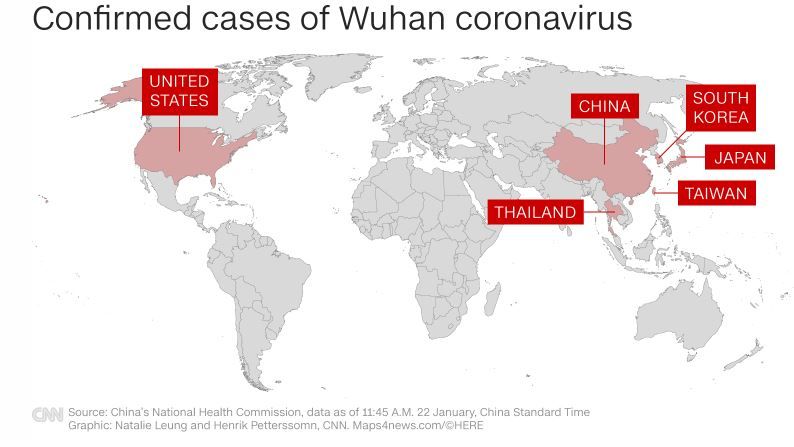
In the Breaking News these days, we all found out about the NEW CORONAVIRUS that has infected hundreds since the outbreak began in Wuhan, China, in December 2019.
Officials in China are racing to contain the outbreak of this new virus that has left at least several (17 and counting) people dead and sickened many hundreds, after it was confirmed the infection can be passed between humans.
THE NEW (2020) CORONAVIRUS
This new CORONAVIRUS is just "a cousin of the SARS virus": it causes pneumonia and then doesn't respond to antibiotic treatment - because it is a new type of virus.
Coronaviruses are a large group of viruses that are common among animals. In rare cases they can be transmitted from animals to humans and from human to human.
Depending on the patient's age, the death rate with SARS ranged from 0-50% of the cases, with older people being the most vulnerable. Statistically SARS had a 10%-15% mortality rate. The death toll from the Wuhan coronavirus has risen to nine, as hundreds more cases were reported across China and as far as the United States, sparking fears of a possible pandemic.
THE 2020 OUTBREAK CONTEXT
Top officials at the World Health Organization are having an emergency meeting in Geneva to decide whether the quickly developing outbreak constitutes a "public health emergency of international concern," and what recommendations should be made regarding it, including potential cross-border screening, greater surveillance and rolling out treatment programs.
China announced it adopted Class A prevention and control measures, typically used for major outbreaks such as plague and cholera. This means health officials will get sweeping powers to lock down affected areas and quarantine patients. China previously used such measures in 2009 to tackle an outbreak of H1N1, introducing mandatory quarantine for anyone who had "close contact" with an infected person, including foreigners arriving in the country from areas where H1N1 outbreaks had been reported.
Like in a "Perfect Storm" type scenario, this new Coronavirus outbreak is happening now, during the Lunar New Year celebrations.
The Chinese New Year is actually the largest annual human migration on Earth: hundreds of millions of people will travel across China and overseas during the four-week period, which began in mid-January and continues until February. Many will go by train or plane, raising the risk of infection as they are put in close contact with other travelers.
What you need to know:
HOW DOES IT SPREAD
Depending on how virulent the new coronavirus is, a cough, sneeze or handshake could cause exposure. The virus can also be transmitted by touching something an infected person has touched and then touching your mouth, nose or eyes. Caregivers can sometimes be exposed
CORONAVIRUS TREATMENT
There is no specific treatment. Most of the time, symptoms will go away after the patient's imune system is fighting them. Doctors can relieve symptoms by prescribing a pain or fever medication. Affected patients are advised to drink plenty of fluids and to rest and sleep as much as possible. If you have symptoms that feel worse than a standard cold or flu, please see your doctor.
HOW CAN YOU PREVENT IT
There is no vaccine to protect against this family of viruses (at least not yet).
YoU may be able to reduce your risk of infection by avoiding people who are sick. Try to avoid touching your eyes, nose and mouth. Wash your hands often with soap and water and for at least 20 seconds.
If you are sick, stay home and avoid crowds and contact with others.Cover your mouth and nose when you cough or sneeze.
THE BIGGER PICTURE:
HOW CAN WE PREPARE FOR A PANDEMIC
Of course, everyone of you are concerned about your health and well being. It's natural.
This new coronavirus can become an international health threat or can be contained and, while the subject disappears from breaking news, the human immune system finds solutions and develops antibodies for this new virus.
But some of us are concerned about the systemic problem: Pandemic as global public health threats.
A pandemic in the future is not just a possible event, but it may be a probable one.
On the UDemocracy platform and in the UDemocracy Community, we must SOLVE SYSTEMIC PROBLEMS, FINDING SYSTEMIC SOLUTIONS.
If we become involved in solving only the problems that affect us directly, we should not be surprised when the others are not getting involved when something happens with us.
We are working together concerned about issues and problems that will affect not just you or me, but us - as society and humanity.
Our plans for pandemics need to take into account more than the usual worst case scenarios.
We must learn from the past (and also from the Hollywood Scenarios), understand the present and prepare for the future!
We must be creative. We must collaborate. We must be open and trust each other. At institutional, governmental, corporate and individual levels.
THE INTERNATIONAL PUBLIC HEALTH POLICY
After the SARS and H1N1 outbreaks, our International health organizations and governmental institutions prepared an official response to and (hopefully) an official reaction procedure for this type of mild = epidemiologically limited (relative small number) outbreaks caused by new viruses.
Over the past years, pandemic preparations have focused on responding to worst case scenarios. As a result, officials are responding to any outbreak (including this one in January 2020) as an unfolding disaster.
Better safe than sorry OR calibrate the reaction?
The measures taken may be seen as alarmist, overly restrictive, or even unjustified. The Media may be exaggerating the danger, but maybe the old saying "better safe than sorry" is quite true.
However, international and national institutions and health organizations must calibrate their response to the threat. Nobody wants to induce panic and the negative impact of this type of pandemic panic may be huge, worse than the real health threat.
The nature of the new viruses, the size and effects of the new infections along with the development of new technologies may change the way we understand epidemic.
We need a new framework for thinking about and reacting to potential pandemics.
The success of public health strategies today depends as much on technical expertise and experience as it does on leadership, problem solving and communication.
The avian flu, the Sars or this new 2020 coronavirus represent a new class of global threats and we urge yoU - active citizens, experts, journalists, politicians, consultants and representatives of companies, governments and international organizations to plan accordingly! To collaborate and work together! Before, during and after any outbreak!
If a human pandemic does strike, the most adaptive organizations have the best chance of surviving. Actually, in the 21st century, during and after the 4th Industrial Revolution, only the adaptive organizations will survive and thrive.
WHAT CAN WE DO TO ADAPT & CHANGE?
Together: ourselves, our organizations, our communities and our society.
- Let's start talking about how we can map out our organizations’ and communities' vulnerabilities.
- Let's share information and resources about what yoU - as people worldwide - can expect from your governments.
- Let's talk about a pandemic from our expert point of view: from a legal perspective, from a business perspective etc. After examining several HR and business related issues, we can find and start testing possible solutions.
- Let's start building some continuity plans to keep our workforce healthy in the event of a pandemic. We can share and learn from best practices.
- Let's put together some pandemic planning guidelines and compile some checklist shared open and free. Because we have an open source philosophy and we believe in Synergy.
- Lets talk about what type of LEADERS we need in case of a global pandemic? Leaders who can articulate the common threat and inspire people to overcome it together.
We may sometimes behave as a think-tank but we want to become a DO-tank!
UDemocracy is a platform and a COMMUNITY of People who ACT for IMPACT.
Change makers and game changers!
Comments